Our Search Party: Finding a Ring Bounty Winner

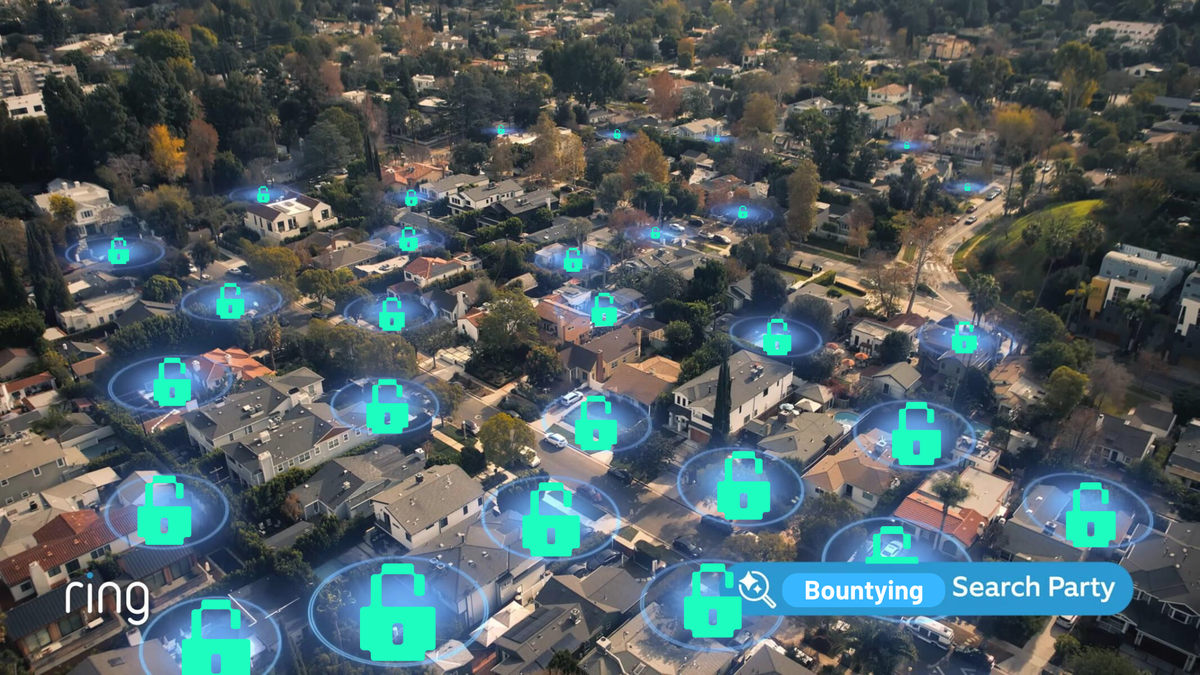
People who own doorbell cameras bought them, in part, to keep people out of their homes. As long as their video footage is stored on corporate servers, consumers could inadvertently be letting others in.
At the heart of security is control. If you own the video generated by your camera, you can control who gets access to it, when. In response to the broad backlash to the Super Bowl commercial for Amazon Ring’s Search Party feature, FULU is announcing a new bounty to put that control back in Ring owners’ hands.
But before we dig into the details of the bounty, let’s talk about why it’s necessary.
“They’re basically sacrificing my community’s privacy and security, and charging me for the experience.”
In its now infamous Super Bowl commercial, Ring announced its new Search Party feature. Search Party uses AI to parse through footage generated by all Ring camera owners to help reunite lost pets with their owners. As warm and fuzzy as the idea of Fido coming home might be, consumers were up in arms over the on-by-default feature.
Much of the intense backlash to Ring’s Search Party program stems from the fact that we don’t fully control the data generated by our devices. Some owners of the doorbell cameras went so far as to destroy their devices in viral videos.
One Redditor lamented the fact that his lack of ownership of his camera footage comes despite buying the hardware—new models start at $180—and paying a subscription ranging from $50-$100 per year to access it
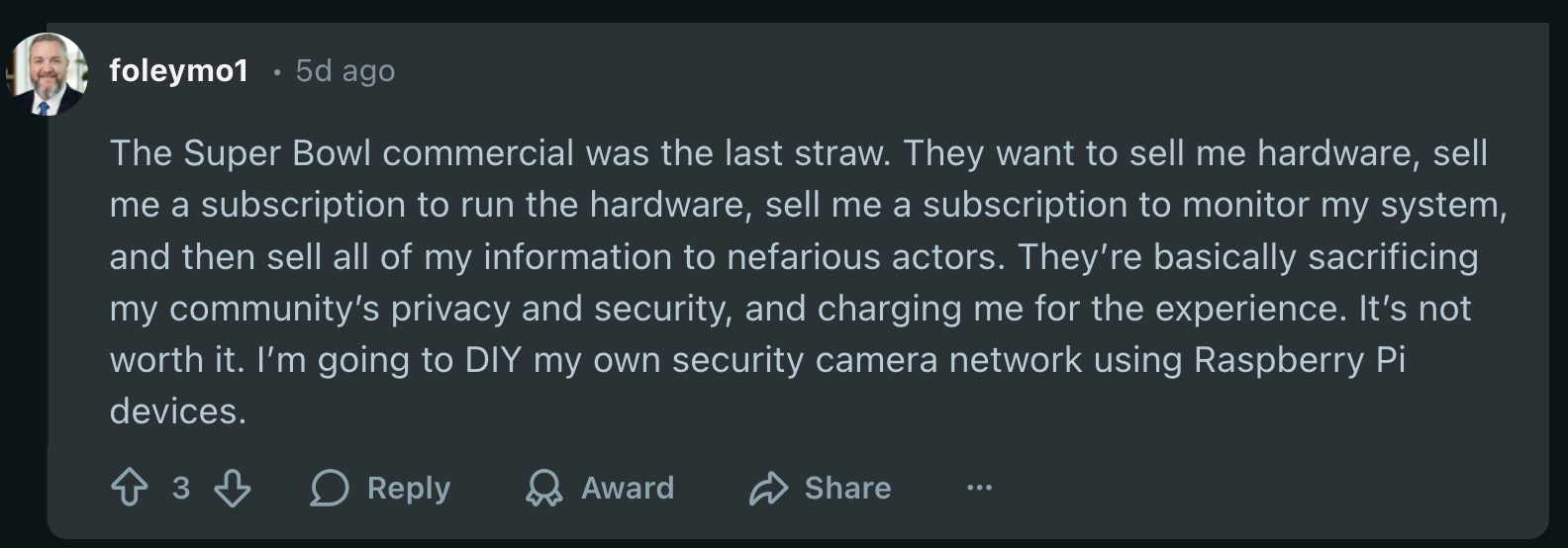
Many others expressed a similar desire to replace their Ring devices with DIY solutions or ones that gave them more ownership over their video. “I was trying to get by with just disabling this stuff because I just bought two Pros and an indoor camera kit under a year ago and I couldn’t justify the expense of spending more money on a different camera system, but now they went and laid it out in plain sight,” one wrote on Reddit.
How secure is your security camera?
This is not the first time that Ring has come under the microscope for behavior that put consumers’ security at risk.
A 2023 Federal Trade Commission complaint alleged that the video doorbell company “gave every employee… full access to every customer video,” prior to 2017. One particular employee reportedly viewed thousands of video recordings belonging to some 81 unique female Ring users, focusing his searches on in-home cameras in intimate areas such as the bedroom and bathroom. The company allegedly did not notify consumers of the broad employee access to cameras.
That complaint also claimed that Ring failed to patch known cybersecurity vulnerabilities that gave malicious hackers access to device owners’ videos. An estimated 55,000 customers were exposed to significant account compromises. "For at least 910 U.S. accounts (affecting approximately 1,250 devices), the bad actor not only accessed the accounts, but took additional invasive actions, such as accessing a stored video, accessing a live stream video, or viewing a customer's profile,” the complaint alleged.
Ring ultimately reached a settlement with the FTC in 2024, which resulted in the company issuing $5.6 million in refunds via 117,044 payments to affected consumers.
Why replace hardware when software is the problem?
While the dust-up is leading many consumers to at least consider replacing their security setups, nothing about the camera or internal electronics of Ring owners’ devices is inherently causing them to feel less secure. The problem lies in the software that runs on those devices and directs video to be sent back to Amazon’s servers. In an ideal world, device owners would be able to modify that software to instead push that footage to their own computer or server, should they so choose.
Our bounty seeks to provide that option to Ring camera owners. Here is how it works: The first person or team to submit a solution that meets the eligibility criteria, including integrating an eligible-model Ring Camera with a local computer or server while shutting off the flow of data to Amazon’s servers, will win the bounty. FULU will put up an initial $10,000 towards the prize, and will match community donations up to an additional $10,000.
Of course, Sec. 1201 of the Digital Millennium Copyright Act yet again will limit the impact of any bounty solution. Digital locks surely stand between a device owner and their ability to modify what data goes where. And that means distributing a tool or mechanism for other security-minded Ring owners to circumvent those locks and assert their ownership over their video remains a copyright crime.
Reforming Sec. 1201 to restore ownership over our stuff
But what is the real crime here? Is it that people don’t own and control the video from their doorbell cameras? Or is it a device owner’s effort to make sure that the only eyes monitoring their life are their own?
Our bounty program strives to bring attention to that absurdity while building a repository of modifications that would allow consumers to take more control over their devices once we’re able to reform Sec. 1201.
We’re not at that point yet. But with more attention and more support from the public, we can change that law. If you’re with us, tell your representative to protect our right to own our stuff.