We're taking a stand against Bambu Labs. Join us.

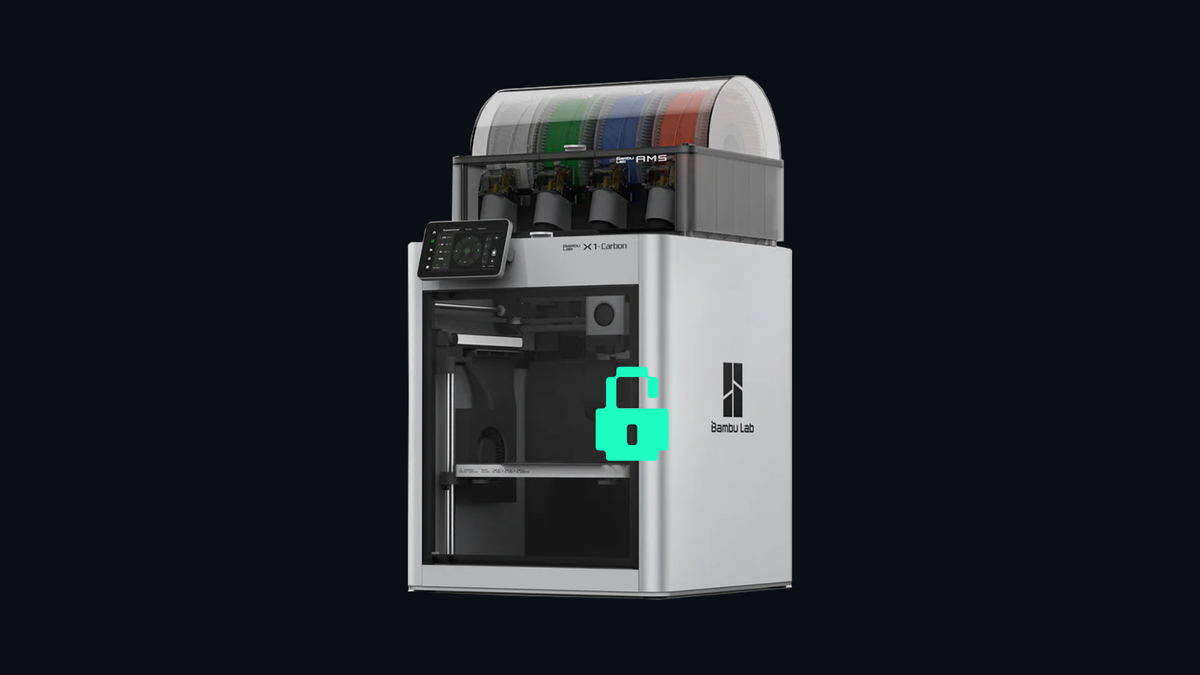
Bambu Labs, a major 3D printer manufacturer, has moved to enshittify their printers by severely limiting device owners’ ability to use alternate software on their devices. When a developer used the company’s open source software to restore interoperability with Orca Slicer, a popular slicing software that gives users more control over their prints, the company threatened legal action.
Our president Louis Rossmann called this behavior out over the weekend, and reposted a version of that repository on FULU’s Github. GamersNexus followed suit by hosting the project on their own servers.
Bambu labs may have been willing to threaten legal action against a single developer who created a project in his spare time. But will they come after all of us?
If you’re willing, create you own fork and let’s find out together.
3D printers are of, by, and for the maker community
“3D printers came out of the maker community,” JS, the owner of Philly Proto Lab, told me. “We were the ones putting things together to make the original versions work. There was always an expectation that openness would continue to be a part of the equation.”
That openness and iteration is part of what made Orca Slicer the preferred slicing software, used to turn a 3D model into layer-by-layer instructions to send to the printer, of many users. Orca Slicer is an open source project specifically devoted to this particular step of the 3D printing process.
For the team at Philly Proto Lab, using the third-party software provided more control over the technical details. Given that his clients include medical device makers, being able to manage stress profiles and run additional optimization procedures can be a big deal.
When JS bought the many Bambu products they use across their business, that was no problem. They got the ready-out-of-the box hardware that makes Bambu so popular while still having access to Orca Slicer.
That changed in early 2025 when Bambu pushed a firmware update that prevented non-Bambu software and hardware upgrades from fully interfacing with its products. Although the company claimed that this was needed for the cybersecurity of their servers, devices running on strictly local networks were also affected. If you had one of the brand’s printers, it was Bambu or bust.
On top of the reduced control that JS has over the machines that he owns, the fact that Bambu’s firmware update means that every one of their print jobs has to be authorized by the company’s servers is a concern.
“Our business now depends on their platform staying online for full functionality. One prolonged outage and our business is effectively dead in the water,” JS said. “If we hadn’t invested so heavily in Bambu hardware, we would have switched to a different brand then and there.”
We are all Pawel
Pawel Jarczak, a developer by trade and 3D printing hobbyist, sought to address the very dilemma that Bambu owners such as John were facing. Using Bambu’s open source code—available because the company built its own products on open source software with an AGPL license—he was able to restore interoperability through his original OrcaSlicer-bambulab and a sibling repository, BambuStudio-BMCU.
Bambu wasn’t happy about that. The company contacted Jarczak privately on Reddit and demanded removal of the OrcaSlicer fork. Per Pawel’s public README, Bambu Lab's allegations were impersonation of Bambu Studio, bypass of authorization controls, ToS violation, reverse engineering, and the potential for modified forks to send arbitrary commands to printers.
Included in the communications the company sent Pawel was an invitation to review Section 1201 of the DMCA.
We agree with Pawel’s argument that those claims don’t carry weight. All he did was use construction and code from Bambu Lab’s open source code. You can’t accuse someone of breaking and entering when you hand them a key.
Pawel decided to voluntary take down the code anyways. But, as Louis said in the video he posted on Sunday, Bambu Labs should pick on someone their own size.
Companies shouldn’t be able to use Sec. 1201 as a cudgel to keep device owners in line
I’m going to sound like a broken record, but it bears repeating: when you buy something, you own it. And when you own something, you should be able to control it. That includes using the software you want to use to make your device work the way you want it to.
The outpouring of community support over the past couple days has been inspiring. A huge thank you to all of you who have donated to support Pawel’s legal defense and our work to restore ownership over our digital devices. We can’t wait to see more projects take over GitHub.