
Auto repair is too expensive, and software is to blame.

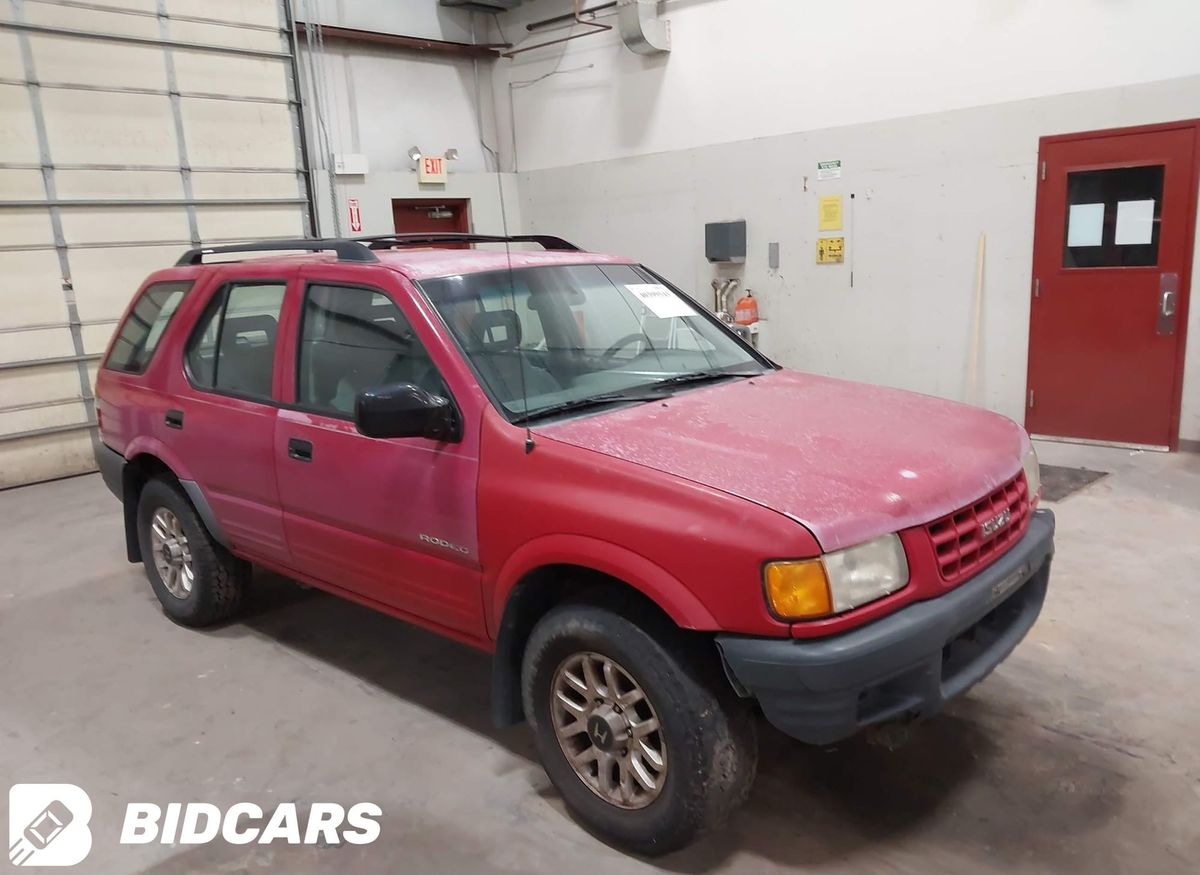
My first car was a 1998 Isuzu Rodeo. It had crank windows, a cassette player, and a red-oxidized-to-pink patina. It was low on bells and whistles, but it took me where I wanted to go, when I wanted to go there. At 16 years old, that Rodeo represented freedom.
Today’s cars, for all of their connectivity and convenience, are vehicles of constraint and corporate overreach. Using your key fob to start your car on a cold morning can cost you $10 a month. GM even came under fire for bundling up consumer data on trips, driving behavior, and location and selling it to the highest bidder.
The erosion of auto ownership rights might be most visible in way that software has infiltrated the repair process. Closing Shop—a new Repair.org report written by iFixit, U.S. PIRG Education Fund, and FULU—estimates that manufacturer software wastes 83 million hours of independent mechanics’ time each year. At typical shop rates, that comes out an additional $12 billion in repair costs. Those costs are ultimately passed on to the consumer.
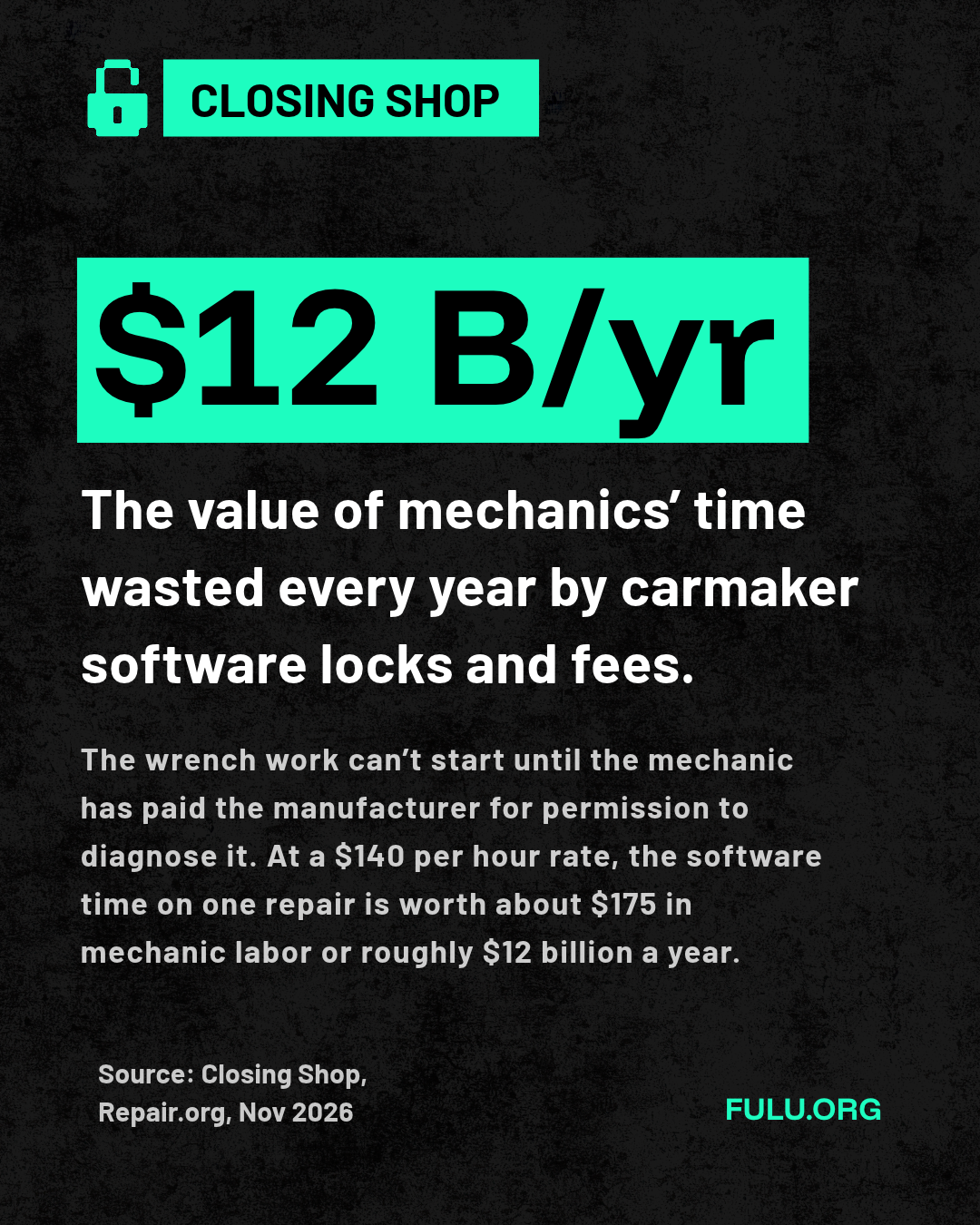
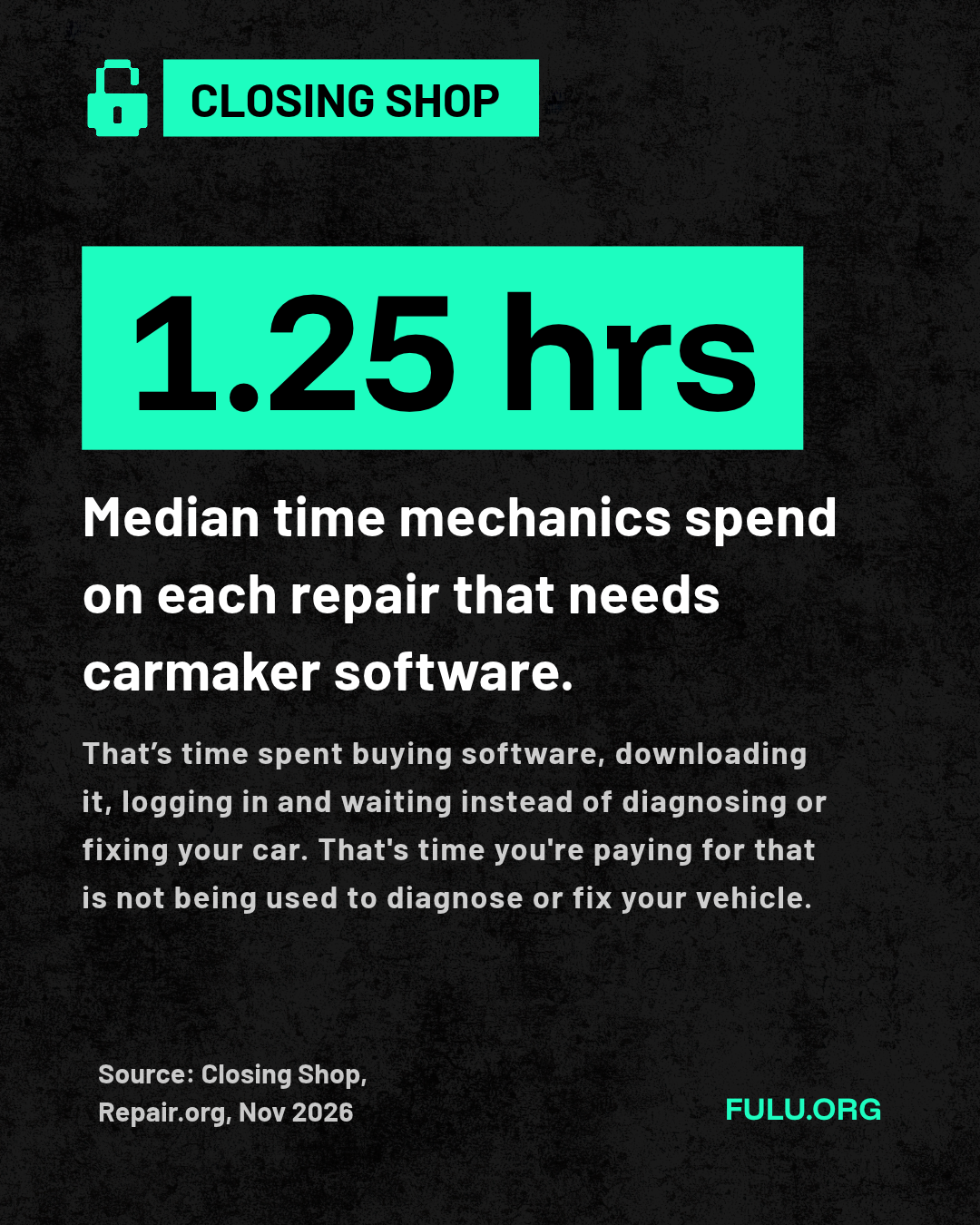
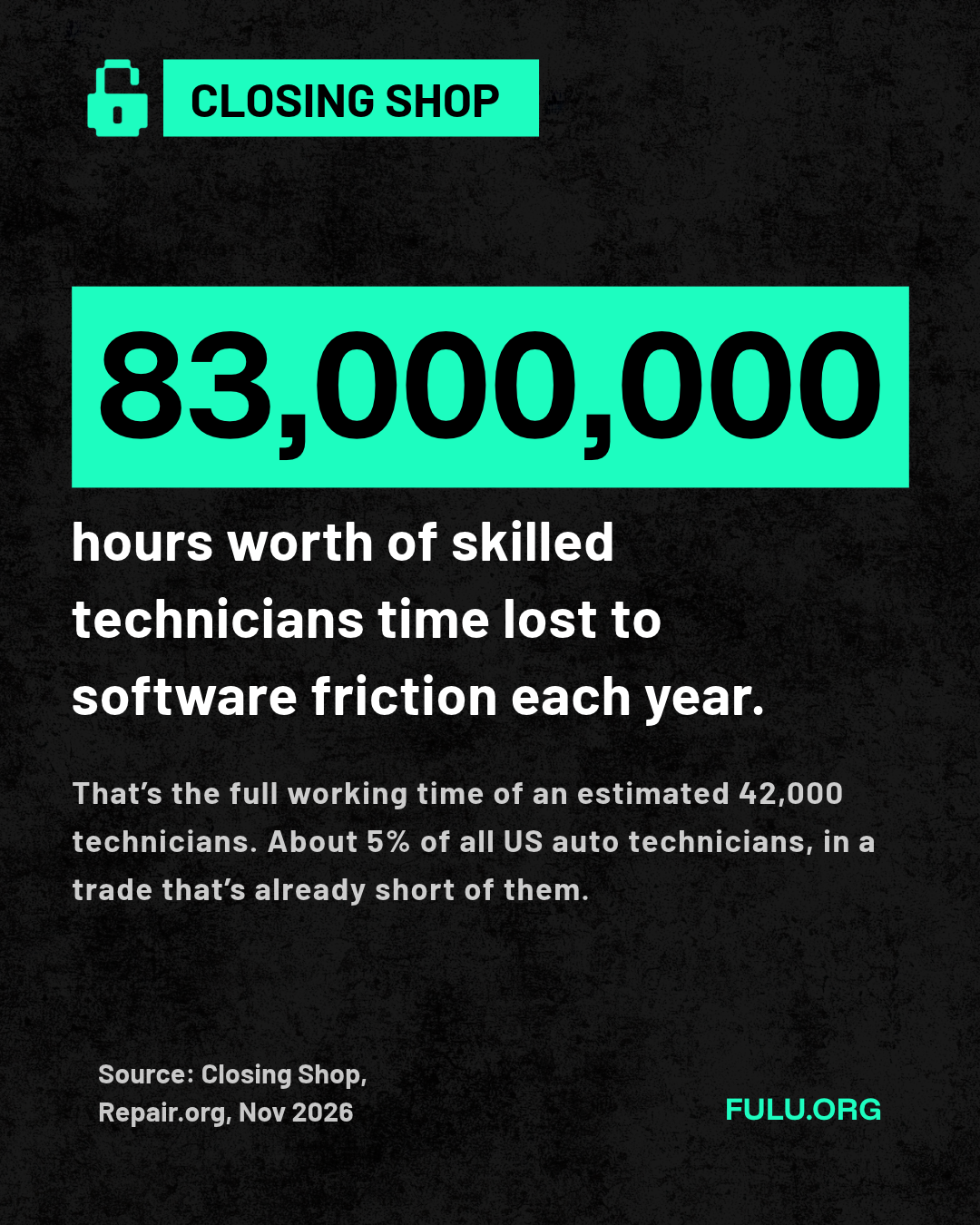
Fiddling with manufacturer software wastes mechanics' time. That time turns into costs passed on to the consumer.
The repair software toll road
Just as exercise bike manufacturers have used digital locks to paywall your ability to track your rides, automakers are now requiring subscriptions to access repair information and functionality.
“We’ve allowed car manufacturers to build a toll road between the mechanic and the repair—and now traveling that road is a nightmare,” Nathan Proctor, the leader of U.S. PIRG Educations Fund’s Right to Repair campaign and one of the authors of the report, said in a statement. “Not only are all these tolls expensive, they also create traffic jams, slowing down the whole process, which adds to the costs for consumers.”
The first repair I remember making on my ‘98 Rodeo was replacing the headlight. Back then, the process was pretty simple: buy a replacement bulb from the local auto parts store, reference the manual in the glovebox to make the repair, turn the key to see if it worked, and drive back home. I can’t remember the exact price of the part, but I rarely carried more than a twenty as a teenager. I’d be willing to bet I got change.
Source: Closing Shop, Repair.org
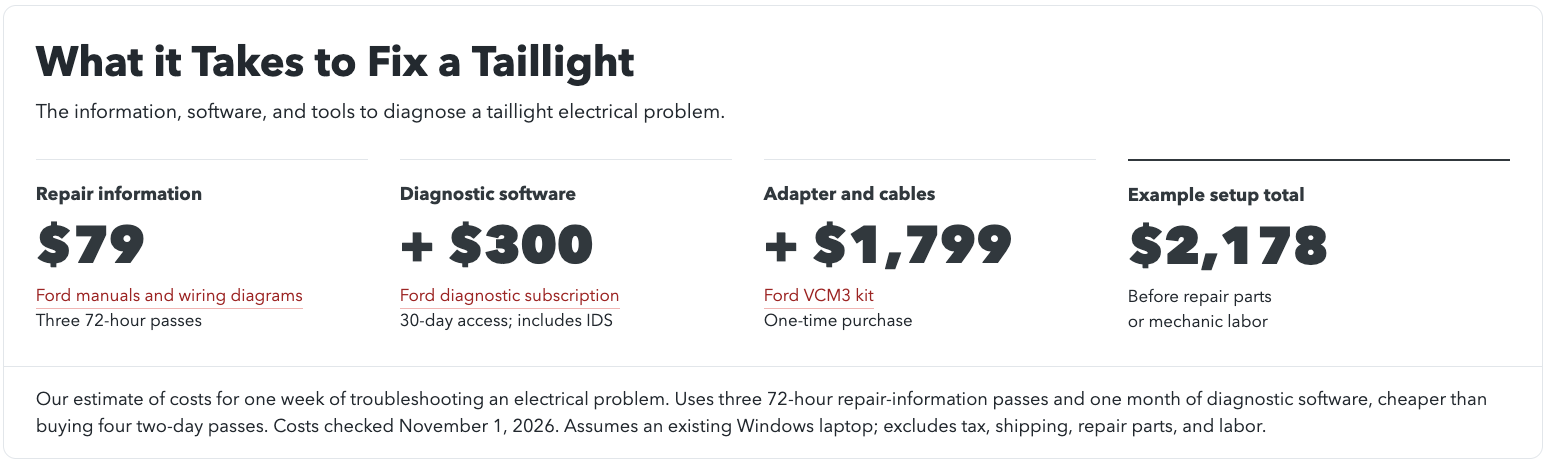
The ‘toll booths’ Proctor mentioned have made this kind of repair far more expensive. In 2023, mechanic Brian Makuloco shared a story about how a water leak in the taillight on a 2018 F-150 led to a $5,600 repair. The taillight assembly alone cost $1000, not to mention fees for repair software, installing necessary safety modules, and labor.
Admittedly, that repair was significantly more complicated than my bulb replacement. But if teenage me was dealing with the same problem, Closing Shop estimates I would have had to drop $2,178 on subscriptions and hardware—before even thinking about parts.
Independent mechanics feel the pain, too
Mechanics are able to spread those software costs across multiple repairs. But in order to service different car makes, they have to buy the package for each manufacturer, and those costs add up. The report estimates that a shop servicing cars from five different manufacturers would have to pay $15,878 a year before seeing a single dollar from a completed repair.
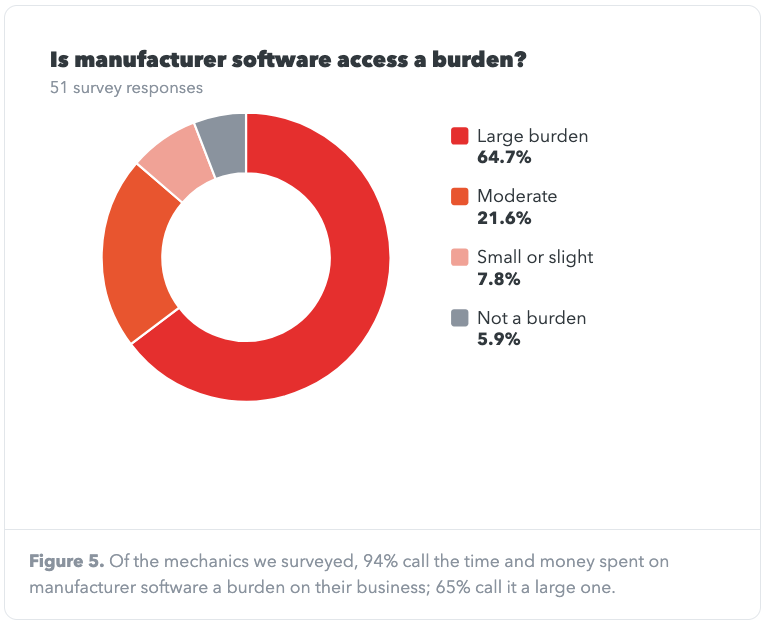
That’s a problem. Of the 51 mechanics surveyed, 94% considered the time and money spent with manufacturer software a burden on their business. Nearly nine out of ten reported turning away a customer because they didn’t have the necessary software.
“Automakers are squeezing the lifeblood out of local mechanics. The outrageous prices they're charging for tools and manuals is driving repair and insurance costs through the roof,” iFixit CEO Kyle Wiens, the lead author of the report, said.
Put car owners back in the driver’s seat
Closing Shop is chock full of other facts demonstrating how automakers use of software to control repair is hurting consumers and small businesses. Car insurance premiums are up, consumer privacy is down, and rural mechanics get punished on per-repair software costs. Unless something changes, there is little hope that these problems will solve themselves.
The independent auto shop is a mainstay of Main Street, just as fixing your car is an American birthright. But we can’t—and shouldn’t—go back to the age of crank windows and cassette players. We just need to be able to control the digital elements of our daily drivers the same way we could control the analog ones. That’s why efforts to give consumers control over their telematic repair data and software through the REPAIR Act and Sec. 1201 reform, respectively, are so important.
Software in cars is here to stay. Manufacturer control of it doesn’t have to be.